UEFA calls emergency meeting amid hardening opposition to FIFA’s World Cup investment plan

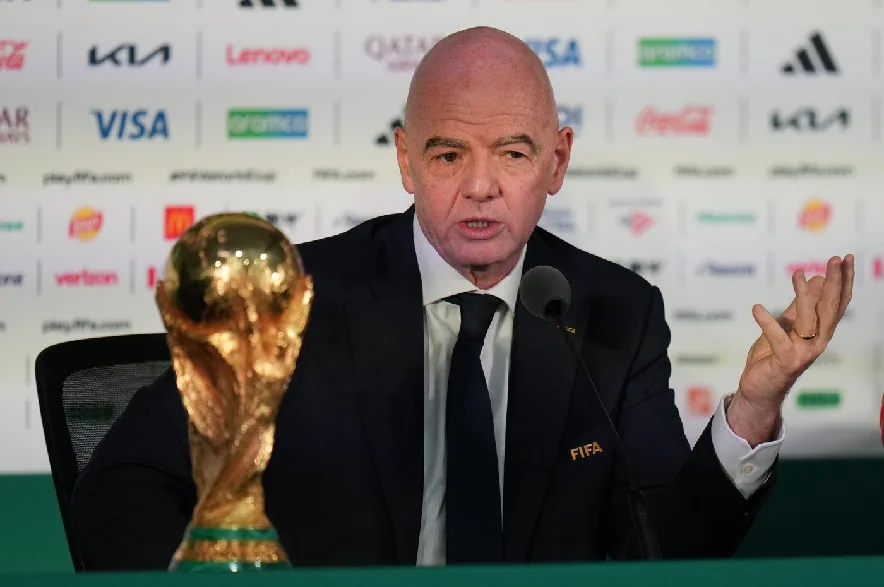
European football bodies oppose FIFA’s investment plan
UEFA has scheduled an emergency meeting for its 55 member associations on Thursday afternoon to discuss a unified response to Gianni Infantino’s proposal to sell stakes in the World Cup to private investors. Among the options being considered is a potential boycott of FIFA tournaments by European teams. Preliminary discussions have mentioned a boycott of next year’s Women’s World Cup as a possibility, though some reluctance exists to impact the women’s game due to a protest primarily focused on the men’s World Cup and Club World Cup monetization.
UEFA’s initial criticism of FIFA’s plan has garnered significant support from Concacaf, the confederation for North, Central American, and Caribbean football, and the Asian Football Confederation (AFC). If the members of these three confederations align, they could potentially gather enough votes to block the proposal. These three confederations collectively represent 143 of the 211 FIFA members. However, unanimous opposition is not guaranteed, as evidenced by Czechia’s football association becoming the first European body to endorse the plan.
Casino Bonuses

100% up to C$750 + 200 Free Spins
- Welcome Package up to C$2,000
- 10% Weekly Cashback

150% up to C$500 + 100 Free Spins
- Welcome Bonus up to C$1,500
- 50 Free Spins Every Friday

100% up to C$1,000 + 150 Free Spins
- Up to C$3,000 on First 3 Deposits
- 25% Reload Every Monday
Infantino, who has received over 200 letters of endorsement for his re-election next year, reportedly believes he has sufficient votes. However, it remains unclear whether the proposal requires a simple majority or a 75% majority, which would be necessary if a change to FIFA statutes is required to create a new commercial entity, FIFA Forward Enterprise (FFE), and sell a 20% stake to investors.
Concerns over due process and financial incentives
On Wednesday evening, Infantino released a video addressing the backlash, describing FFE as a proposal and an opportunity within a democratic and consultative process. He stated it is a “golden opportunity to turbocharge the development of the game globally.” Earlier, UEFA intensified its criticism, accusing FIFA of “using our sport to enrich themselves and their friends.” This accusation followed reports that Infantino had set a deadline of September 19 for members to decide on applying for an initial payment of $20 million from the proposed sell-off.
An additional $20 million for each association would also be made available later, though it is not clear if accepting these funds would constitute a formal endorsement, thereby negating the need for a vote. UEFA stated, “Today we have learned of FIFA’s deadline to associations to support their proposals or have the one-off payout offer withdrawn. This says everything you need to know about this plan.” The organization added that discussions with various stakeholders indicate significant and growing opposition to FIFA’s scheme.
Concacaf also voiced strong disapproval, noting it was only informed of the matter through media reports. The confederation expressed deep concern over the lack of due process and disappointment that such a detailed plan was made public before discussions with relevant governance bodies and stakeholders. Victor Montagliani, the Concacaf president, was reportedly unaware of the plans despite his role in the successful bid for the recent World Cup.
The AFC issued a similar statement, indicating it was not consulted on the proposal and was disappointed that a matter of such significance entered the public domain without prior engagement through established governance channels. This statement from the AFC is understood to have the backing of the Saudi Arabian football federation, which is set to host the 2034 World Cup.
Wider opposition and potential implications
Elite clubs, represented by the European Football Clubs organization, also expressed dissatisfaction, highlighting that FIFA had not consulted them despite a memorandum of understanding between the two bodies. The organization, which represents over 850 football clubs, stated it learned about the proposal through the media, similar to most global football stakeholders.
The proposal, backed by Joshua Kushner’s investment firm Thrive Capital, has been met with immediate strong reactions. UEFA has previously used the tactic of threatening a boycott of FIFA competitions, which helped to halt Infantino’s earlier plan to hold the World Cup every two years. UEFA president Aleksander Čeferin has expressed his opposition to the project.
The FIFA subsidiary, valued at $20 billion, would be 20% owned by private investors and would manage FIFA’s competitions and events. Infantino stated in a letter that it is his duty to present such opportunities to member associations. The proposed financial incentive for member federations is a significant increase, with $20 million offered as part of the 2030 World Cup commercial cycle, compared to $10 million over four years if the plan is rejected. This difference amounts to $86 million over 12 years versus approximately $36 million in existing promised funding for those who reject the private equity deal.
British Prime Minister Andy Burnham also voiced opposition, stating that “football does not belong to investors” and that it belongs to the fans. His government is preparing to support a bid to host the 2035 Women’s World Cup in England, Scotland, Wales, and Northern Ireland, with FIFA expected to confirm the lone bid at an online meeting in November.
This latest plan is part of Infantino’s ambitious projects during his 11-year presidency, which have often been proposed without consulting major stakeholders. Previous initiatives include a FIFA Peace Prize and a $25 billion private equity plan in 2018 for new men’s competitions, which UEFA resisted. The current proposal has raised concerns that inviting private investors could incentivize FIFA to further commercialize the World Cup, potentially leading to more hydration breaks and dynamic pricing to increase revenue.
Source: theguardian.com

