Beijing hosts World Humanoid Robot Games as robot sprinter sets new 100-metre record

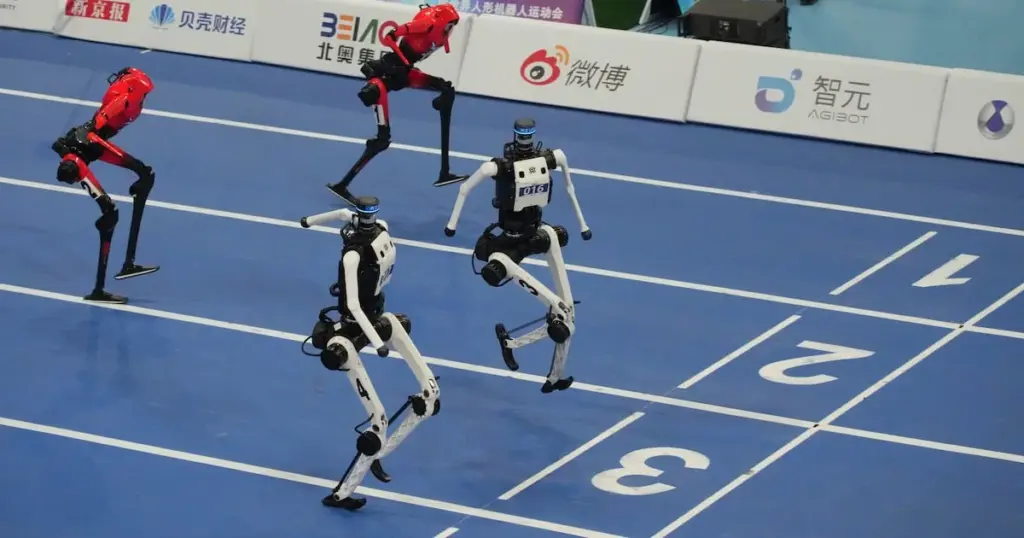
Robots showcase speed in Beijing
In Beijing, a humanoid robot has surpassed the human world record for the 100-metre sprint. The Tiangong Ultra humanoid robot completed the 100-metre dash in 8.64 seconds at the World Humanoid Robot Games. This time is faster than Usain Bolt’s human world record of 9.58 seconds, which he set in 2009.
The 8.64-second run marked a new record for the second consecutive day at the event. Another robot had previously recorded 8.86 seconds on Tuesday, following a 9.39-second run four days earlier. These achievements took place during the second annual World Humanoid Robot Games, a five-day competition featuring over 2,000 humanoid robots in various Olympic-style events, including soccer, boxing, and running.
Casino Bonuses

100% up to C$750 + 200 Free Spins
- Welcome Package up to C$2,000
- 10% Weekly Cashback

150% up to C$500 + 100 Free Spins
- Welcome Bonus up to C$1,500
- 50 Free Spins Every Friday

100% up to C$1,000 + 150 Free Spins
- Up to C$3,000 on First 3 Deposits
- 25% Reload Every Monday
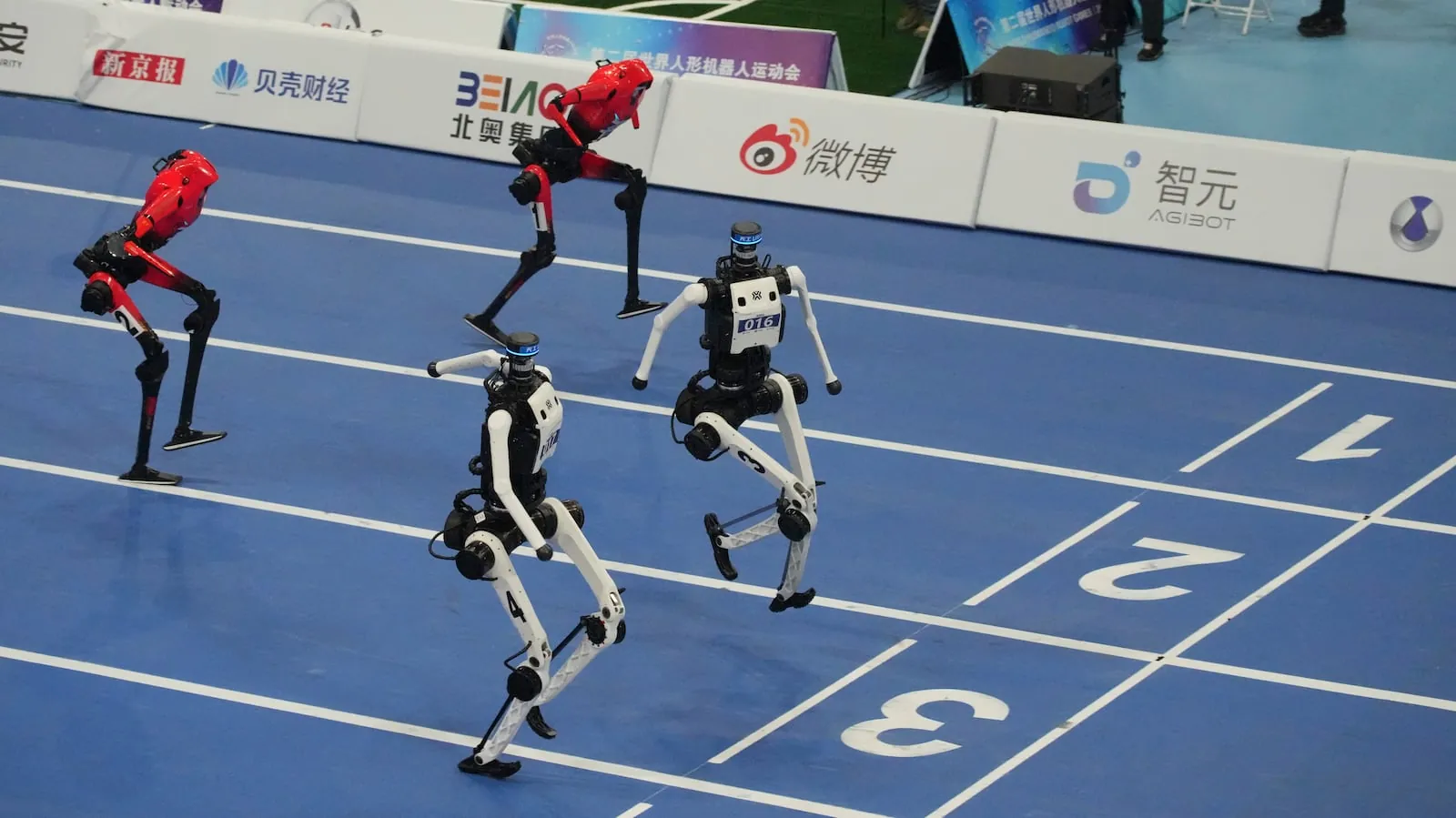
The average speed of the Tiangong Ultra during its record-breaking run was nearly 42 kph (26 mph). Jung Moon-hyun, a sports science professor, noted the technological advancement that allows humanoids to maintain balance and sprint at speeds humans cannot match.
Differences in sprinting technique
Experts highlight key differences between human and robot sprinting. Usain Bolt’s 2009 record run in Berlin began with a reaction time of 0.146 seconds from starting blocks, which help human sprinters generate initial horizontal force. In contrast, the Tiangong Ultra starts from an upright position and, in one instance, took almost a full second to begin moving after the signal.
Iain Hunter, a professor of exercise science, estimated that Bolt would have reached the five-metre mark nearly 2 seconds ahead of the Tiangong Ultra. However, the robot’s design offers distinct advantages. Its developer redesigned parts of the torso and waist to reduce weight and the effort required for movement. Improvements were also made to the robot’s motors, range of movement, and control software, according to Guo Yijie, a manager in its humanoid innovation department.
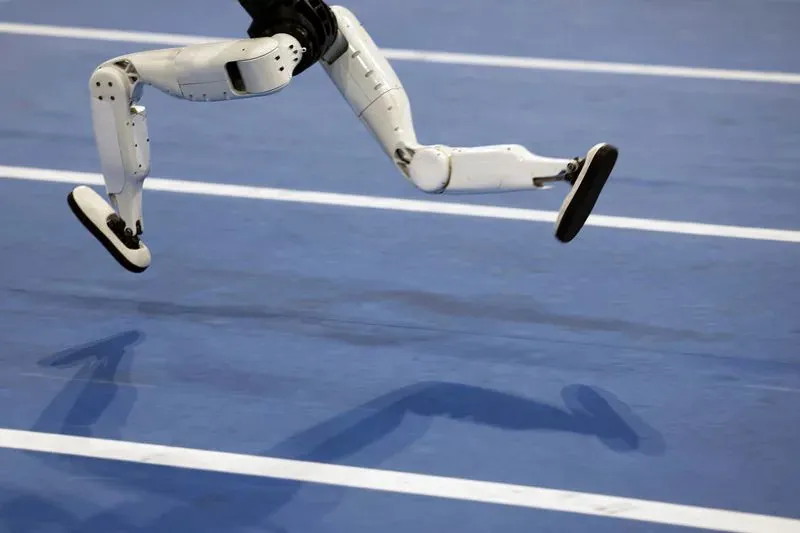
The robot’s technique involves shorter, faster steps. Bolt completed 100 metres in 41 steps, while the Tiangong Ultra appeared to take more than 50 steps in its first record-breaking run. This gait, according to Park Suhan, a robotics professor, seems to optimize what the motors can achieve rather than mimicking human sprinting. Parunchaya Jamkrajang, a sports scientist, suggested that these smaller, choppier steps could aid in balance, as wider strides might lead to falls.
Robotic endurance and future challenges
Human sprinters generate power through muscles and tendons, with flexible joints absorbing and returning force. Robots, however, use electric motors and gearboxes to generate power more quickly. Park Hae-won, a professor who leads a humanoid lab, explained that electric motors create rotation directly at the joint, unlike muscles that pull and extend.
Unlike humans, who experience neuromuscular fatigue and slow down in the final 20 metres, the Tiangong Ultra does not appear to slow. Matt Bundle, a biomechanics expert, observed that the robot maintains its highest speed through the final stage of its run. However, race video showed the Tiangong Ultra crashing into a padded wall after crossing the finish line in its first record run.
Several robot runners, including the champion, crashed into a padded barrier, with sparks observed from some robots, requiring staff to use fire extinguishers. Most robot runners were subsequently carried away on stretchers. Experts acknowledge the progress in predictable environments like a track but note that navigating complex real-world scenarios remains a challenge. Jonathan Hurst, a professor of robotics, stated that true progress would be seen in environments like warehouses and factories where humanoids perform autonomous work for extended periods and generate economic value. Robots also competed in tasks such as housework, hotel services, and emergency response during the games.
The Tiangong Ultra model, which set all three recent records, was developed by the Beijing Innovation Center of Humanoid Robotics, also known as X-Humanoid, a company founded in Beijing in 2023.
Source: ca.news.yahoo.com

